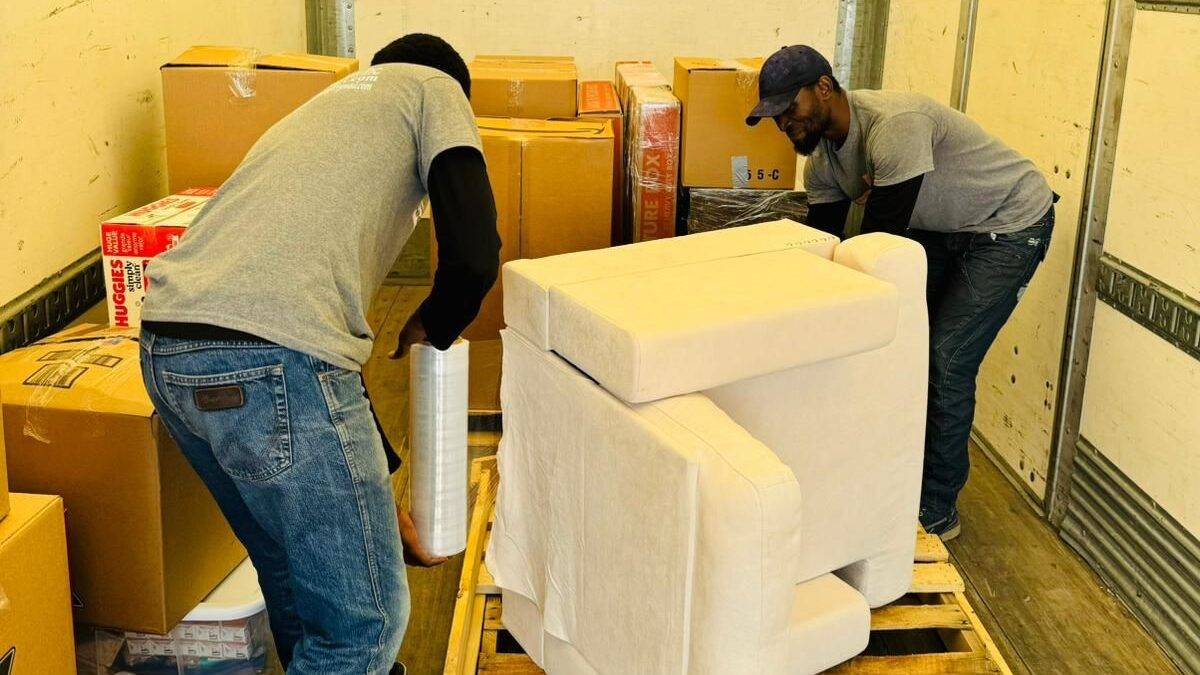



Relocating an office is an important decision for any business. Whether you are expanding into a larger workspace, moving closer to customers, reducing operating costs, or opening a new location, an office move requires careful coordination.
Unlike a residential relocation, commercial moving often involves employees, customers, computers, confidential documents, office furniture, and essential business operations.
Without adequate preparation, even a relatively small office relocation can lead to unnecessary downtime, misplaced equipment, communication problems, and unexpected expenses.
The good news is that a well-organized moving plan can make a significant difference.
In this guide, Deomas Movers shares a practical office moving checklist to help Winnipeg businesses prepare for relocation, protect important assets, and resume operations as smoothly as possible.
If your company is planning an upcoming move, our professional moving services in Winnipeg include assistance with commercial and office relocations.
Why Office Moving Requires a Different Approach
Moving an office involves more than packing desks and chairs into a truck.
Business owners and office managers must consider how the relocation will affect employees, customers, technology, suppliers, and daily operations.
An office move may also involve coordinating building management, internet service providers, security personnel, and furniture suppliers.
For example, moving a small consulting office may require only a few workstations and filing cabinets. Relocating a larger business could involve several departments, networking equipment, conference furniture, and hundreds of individual items.
Both situations benefit from clearly defined responsibilities and a realistic timeline.
Working with experienced commercial movers in Winnipeg can help reduce some of the logistical demands of moving furniture, equipment, and other workplace belongings.
1. Start Planning Your Office Relocation Early
The first step in a successful office move is creating a realistic relocation schedule.
Ideally, planning should begin well before the proposed moving date, particularly when multiple employees or departments are involved.
Start by identifying the reasons for your move and outlining the major tasks that must be completed.
Consider the following questions:
- When must the current office be vacated?
- When will the new workspace become available?
- How much furniture and equipment needs to be moved?
- Which business activities must continue during relocation?
- Will employees work remotely while the move takes place?
- Are any renovations or installations required?
- What is the estimated relocation budget?
Answering these questions early helps you understand the scope of the move and identify potential complications.
2. Create an Office Moving Budget
Office moving costs depend on several factors, including the size of your workspace, the volume of furniture, the distance between locations, and the services required.
Your budget should consider more than transportation alone.
Possible expenses include packing materials, moving labour, furniture dismantling, equipment installation, cleaning, utility transfers, and replacement items.
You may also need to account for additional building-related charges such as elevator reservations or after-hours access.
A realistic budget should include a contingency amount for unexpected expenses.
Instead of relying on rough assumptions, request a detailed estimate that reflects your particular requirements.
Visit the Deomas Movers pricing page to request a quote for your upcoming office relocation.
3. Appoint an Office Moving Coordinator
Assigning one person to coordinate the relocation can greatly improve communication.
The moving coordinator may be an office manager, operations manager, administrator, or another responsible employee.
Their role is to oversee the checklist, monitor deadlines, and communicate with the moving company.
For larger businesses, consider involving representatives from important departments such as IT, administration, finance, and human resources.
Each representative should understand which tasks they are responsible for completing.
A central point of contact also helps prevent contradictory instructions on moving day.
For example, your moving coordinator can confirm which furniture must be transported, what equipment requires special attention, and where items should be placed at the new office.
4. Assess Your New Office Space
Before moving, carefully examine your new workplace to determine how existing furniture and equipment will fit.
Measure important areas, including office rooms, doorways, corridors, storage spaces, and entrances.
Check whether large desks, cabinets, and conference tables can be transported through the available access points.
You should also review electrical outlets, internet connections, lighting, accessibility requirements, and other building features.
Creating a simple office floor plan makes the process easier.
Assign workstations, meeting rooms, storage areas, and shared equipment locations before the relocation.
This helps movers place items in the appropriate locations instead of leaving everything in a single room.
It also reduces unnecessary furniture movement after the initial delivery.
5. Declutter and Organize Your Office Inventory
An office relocation is an excellent opportunity to review what your business actually needs.
Over time, many workplaces accumulate damaged furniture, outdated electronics, duplicate office supplies, and documents that are no longer required.
Before packing, create an inventory of your major office assets.
Separate belongings into categories such as items to move, items to donate, items to recycle, and items requiring secure disposal.
Be careful when disposing of business records or electronic equipment containing sensitive information.
Follow applicable retention, privacy, and disposal requirements before destroying documents or wiping devices.
Reducing unnecessary items can simplify packing and help you make more efficient use of your new workspace.
It may also reduce the volume of belongings requiring transportation.
6. Protect Computers and IT Equipment
Technology is often one of the most important parts of an office relocation.
Computers, servers, printers, network equipment, and communication systems support essential daily operations.
A poorly coordinated equipment move can interrupt customer communication, employee productivity, and access to business information.
Before moving, ask your IT administrator or service provider to prepare a technology relocation plan.
Important tasks include backing up critical data, documenting existing connections, labeling cables, and securely shutting down equipment.
Sensitive data should be backed up using appropriate security measures and tested according to your organization’s recovery procedures.
Where necessary, arrange for qualified technicians to disconnect and reinstall specialized systems.
Use suitable packaging and cushioning to protect equipment during transportation.
The moving team should be informed about any items requiring special handling.
For fragile or valuable items, review our guide on protecting valuable belongings during a move for additional considerations regarding furniture handling and preparation.
7. Label Every Box and Piece of Equipment
A clear labeling system is one of the easiest ways to improve office moving efficiency.
Instead of labeling boxes with vague terms such as “office supplies,” identify the department, destination room, and contents.
For example, a box could be labeled “Finance Department — Room 204 — Stationery.”
Use consistent labels throughout the office.
For large businesses, consider assigning colours or identification numbers to departments.
Maintain a matching inventory list so you can track which items have been packed, transported, and delivered.
Confidential records and sensitive materials may require additional tracking and secure handling arrangements.
A good labeling system allows movers and employees to identify destinations quickly, reducing confusion during unloading.
8. Plan Furniture Disassembly and Reassembly
Office furniture can be difficult to transport without proper preparation.
Large desks, conference tables, shelving units, modular workstations, and storage cabinets may need to be dismantled before moving.
Check the manufacturer’s instructions before disassembling furniture.
Keep screws, bolts, and small fittings in labeled bags attached securely to the corresponding furniture pieces.
Take photographs of complex furniture arrangements when necessary.
This can make reassembly easier and reduce the possibility of missing components.
Some furniture may require professional assistance to dismantle or transport safely.
Deomas Movers lists furniture assembly and disassembly among its available services.
For more information, read our article on DIY versus professional furniture assembly and disassembly.
9. Communicate the Relocation Plan to Employees
Employees should receive clear information about the office relocation well before moving day.
Explain why the business is moving, when the relocation will take place, and what employees need to do to prepare.
Let team members know whether they are responsible for packing personal belongings or specific workstation items.
Provide instructions for securing company laptops, documents, and other important equipment.
If remote working arrangements are planned, communicate the expected dates and procedures.
Employees should also receive practical information about the new office, including its address, access arrangements, parking availability, and workspace allocation.
Good communication helps reduce uncertainty and allows employees to prepare for the transition.
10. Notify Customers, Suppliers, and Business Partners
An office move should not interrupt essential customer communication.
Before relocating, identify everyone who needs to know about your new address.
Depending on the business, this may include clients, suppliers, delivery companies, service providers, financial institutions, and relevant authorities.
Update your business address on your website, contact page, email signatures, invoices, and other customer-facing materials.
If your business has a Google Business Profile, update the location details according to Google’s requirements.
You should also review business directories and other online listings to maintain consistent contact information.
Where appropriate, announce the relocation in advance so customers know when and where they can reach you.
Maintaining accurate business information is especially important for companies that depend on local Winnipeg customers.
11. Coordinate Building Access and Moving Logistics
Commercial buildings often have specific rules regarding relocation activities.
Some buildings require advance elevator reservations, proof of insurance, loading dock bookings, or permission to move large furniture.
Contact the management teams at both your current and new office locations.
Ask about permitted moving hours, loading arrangements, parking restrictions, and any access requirements.
If your business is relocating during winter, pay particular attention to snow removal, icy walkways, and truck accessibility.
Make sure your moving company understands any restrictions before the scheduled date.
Providing accurate logistical information helps reduce avoidable delays.
12. Choose Professional Office Movers in Winnipeg
The moving company you choose can influence how efficiently your relocation is completed.
Before booking, look for a company that understands commercial moving requirements and offers the services your business needs.
Discuss the approximate number of workstations, furniture items, boxes, and specialty equipment involved.
Ask whether furniture disassembly, packing supplies, or additional handling services can be arranged.
You should also confirm the estimated charges, moving schedule, and procedures for dealing with unexpected circumstances.
Deomas Movers provides commercial and residential moving services in Winnipeg, along with furniture handling and other moving solutions.
For more information, visit our commercial moving services page or contact Deomas Movers.
13. Inspect and Organize the New Office
Once your belongings arrive, review your inventory and check that major furniture and equipment have been delivered to the correct locations.
Inspect items for visible damage and report any concerns promptly through the appropriate process.
Ask your IT team to reconnect essential systems and confirm that computers, internet connections, printers, and communication equipment are working.
Check access systems, safety equipment, utilities, and other important building functions.
Prioritize the workspaces required for critical business operations.
You do not necessarily need to unpack every box immediately.
Focus first on making essential departments and services operational.
14. Review Your Office Relocation After Completion
A successful office move does not end when the truck leaves.
During the first few days, check whether employees have the equipment and workspace they need.
Confirm that suppliers, customers, and delivery providers have the correct address.
Review any outstanding issues relating to furniture, equipment, documentation, or building access.
You should also reconcile relocation expenses against your original budget.
If the move involved several departments, gather feedback from employees about problems that still need attention.
Completing this final review helps your business settle into its new environment and return to normal operations.
Frequently Asked Questions About Office Moving in Winnipeg
How far in advance should I book office movers in Winnipeg?
The ideal booking period depends on the size and complexity of your business relocation. Smaller offices may need less preparation time, while larger companies can require several months of coordination. Contact a moving company early to discuss availability and scheduling.
How much does it cost to move an office in Winnipeg?
Office moving costs vary according to the amount of furniture and equipment, travel distance, building accessibility, labour requirements, and additional services. A personalized quote is the best way to understand your expected costs.
Can office movers help with heavy furniture?
Professional moving companies may assist with desks, cabinets, tables, and other heavy office furniture. Discuss oversized, fragile, or unusually heavy items in advance to confirm that appropriate arrangements can be made.
How can a business reduce downtime during relocation?
Start planning early, assign clear responsibilities, back up important data, label equipment, coordinate IT installation, and prioritize essential business operations. A phased relocation or temporary remote working arrangement may also be useful.
Should employees pack their own office belongings?
Employees can often pack personal items and ordinary workstation supplies, but businesses should establish clear procedures for company equipment, confidential records, and fragile items. Specialized equipment may require professional handling.
Plan Your Office Move With Deomas Movers
Relocating your business is a major undertaking, but careful planning can make the process more manageable.
From preparing your relocation budget and organizing equipment to coordinating employee responsibilities and arranging transportation, every step contributes to a smoother transition.
Whether you are moving a small office, expanding into a new commercial space, or relocating your operations elsewhere in Winnipeg, Deomas Movers can help you discuss the moving services that fit your requirements.
Ready to relocate your business?
Request a free office moving estimate or call +1 (204) 290-6899 to discuss your upcoming commercial move.
Let Deomas Movers help you move your business forward.